Driving a vehicle with deteriorating paint protection film through the historic streets of Sacramento can quickly turn a premium asset into an eyesore. Finding high-quality ppf in Sacramento is essential for maintaining your vehicle’s aesthetic value, but even the strongest protective films eventually reach the end of their useful lifespans. Commuters driving along the busy lanes of Interstate 5, Highway 99, or the Capitol City Freeway are constantly exposed to flying asphalt, intense UV radiation, and environmental fallout. Knowing exactly when to remove and replace aging film is the only way to prevent permanent damage to your underlying factory paint. Whether you routinely park near the bustling Golden 1 Center or commute from neighboring suburbs like Roseville or Elk Grove, maintaining a fresh protective layer is critical for clear coat preservation.
Failing to address worn-out polyurethane layers in a timely manner can lead to several severe consequences for your vehicle’s body panels:
- Adhesive crystallization: The specialized bonding agents can fuse permanently to your factory clear coat, making future removal exceptionally difficult.
- Severe paint staining: Degraded film loses its chemical resistance, allowing acidic contaminants to seep through and stain your original paint.
- Diminished physical appeal: Yellowed, cracked, or peeling film makes even the most luxurious sports car or utility truck look neglected.
- Loss of impact absorption: Brittle, aging polyurethane loses its elasticity and can no longer distribute the impact energy of flying road gravel.
How long does paint protection film last before it needs to be replaced?
On average, a professionally installed, high-quality paint protection film will last between 5 and 10 years before it requires replacement. This operational lifespan depends heavily on the brand of film selected, the vehicle’s daily exposure to harsh weather, and your routine maintenance habits. Garage-kept vehicles that receive regular washings and UV-protective sealants will easily reach the decade mark, while daily commuters parked outdoors will require replacement sooner.
To understand why different films degrade at different rates, it is helpful to look at the primary variables that dictate longevity:
- Polyurethane material quality: Premium films use advanced aliphatic polyurethane, which resists yellowing and cracking far better than cheaper PVC-based alternatives.
- UV radiation exposure levels: Vehicles parked outdoors in hot climates experience accelerated polymer breakdown compared to those stored in enclosed garages.
- Routine washing and sealing: Regularly removing surface contaminants and applying specialized sealants prevents the film’s pores from clogging.
- Initial installation standards: Meticulous paint preparation and expert edge-wrapping prevent early edge lifting and moisture intrusion.
- Local road conditions: Frequent travel through active construction zones and gravel-strewn freeways subjects the film to higher physical stress.
What are the common signs PPF needs replacement?
The most common signs PPF needs replacement include deep yellowing, severe surface cracking, edge lifting, bubbling, and a complete loss of its self-healing capabilities. Regularly inspecting your vehicle’s high-impact zones allows you to spot these indicators before the film degrades to a point where it endangers the clear coat underneath.
Yellowing and Optical Cloudiness
Over time, continuous exposure to harsh UV rays can cause the chemical binders within the film to oxidize. This chemical reaction leads to a distinct yellow or cloudy appearance, which is especially noticeable on white, silver, or light-colored vehicles. Yellowed film cannot be polished back to clarity and must be completely replaced to restore the clean look of your paint.
Cracking and Surface Shattering
As polyurethane ages, it loses its plasticizers, causing the material to become brittle, dry, and lose its natural flexibility. When this occurs, microscopic cracks, often resembling a shattered glass pattern or fine spiderwebs, begin to develop across the surface of the film. Once cracking begins, the barrier is compromised, allowing dirt and moisture to penetrate directly to the paint.
Edge Lifting and Dirt Accumulation
The adhesive layer near panel edges, wheel wells, and deep body lines can slowly degrade due to high-pressure washing or road friction. Once an edge lifts, road grime, water, and black dirt begin to collect underneath the loose film. This not only ruins the seamless look of the installation but also creates an abrasive pocket that can scratch your paint as the vehicle vibrates.
Complete Loss of Self-Healing Properties
Modern clear bra films feature a specialized elastomeric topcoat designed to heal fine scratches when exposed to ambient heat. As this top layer wears thin from years of washing and environmental abrasion, the self-healing polymers lose their elasticity. If fine swirl marks and light scuffs remain visible even after parking in the direct sun, your protective layer has lost its primary defensive feature.
Why is timely replacing old paint protection film critical for clear coat safety in relation to PPF in Sacramento, CA?
When evaluating options for PPF in Sacramento, CA, understanding the chemistry of aging adhesives is paramount to protecting your vehicle. Leaving degraded polyurethane on your car’s panels for too long turns a protective barrier into a hazard that can permanently damage your factory clear coat during removal.
Deteriorated film experiences a chemical breakdown where the acrylic adhesive undergoes extreme cross-linking under constant solar heat. This cross-linking process causes the glue to form a bond with the clear coat that is actually stronger than the paint’s bond to the metal panel.
- Risk of paint delamination: Attempting to peel away brittle, crystallized film often pulls the clear coat and color layer clean off the panel.
- Acidic moisture entrapment: Micro-cracks in old film allow rainwater and acidic bird droppings to seep through and become trapped against the paint, causing rapid corrosion.
- Labor-intensive removal costs: Neglected film that has shattered into thousands of tiny pieces requires dozens of hours of delicate hand-scraping, dramatically raising labor costs.
- Permanent adhesive staining: Cured adhesive residues can leach into the porous clear coat, leaving permanent ghosting lines even after professional polishing.
If you suspect your vehicle’s film is reaching the end of its safe operational lifespan, you can contact us to schedule a professional paint and film evaluation. Our technicians will inspect the thickness and adhesive bond of your current layer, helping you make an informed decision before any damage occurs.
What is the process for professional PPF removal?
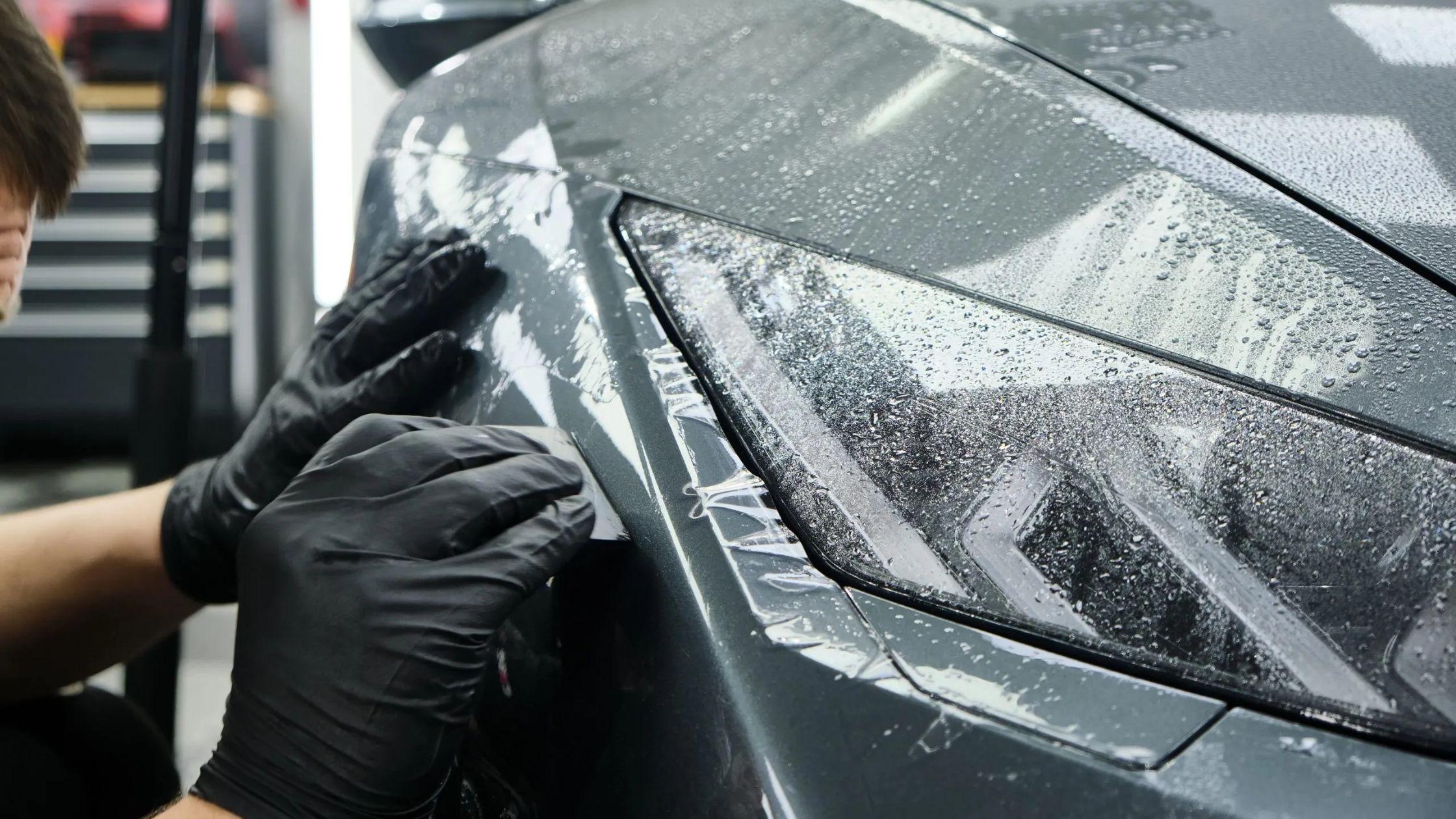
The process of professional PPF removal involves using controlled thermal energy, specialized steam machines, and paint-safe chemical solvents to systematically dissolve the adhesive bond. This precise, highly delicate process ensures the film releases cleanly from the panel without stretching the underlying paint or leaving behind a stubborn, hardened layer of glue.
To ensure your vehicle is treated with the highest level of care, professional technicians follow a rigorous multi-step removal protocol:
Step 1: Deep Surface Decontamination
The entire vehicle is thoroughly washed and treated with an iron remover and clay bar to eliminate any loose dirt, road grime, or abrasive particles. Removing surface debris is essential to prevent accidental scratching during the subsequent removal steps.
Step 2: Precision Thermal Softening
Installers use high-output commercial steamers or infrared heat lamps to slowly warm the degraded film to a precise temperature range. This controlled heat softens the underlying acrylic adhesive matrix, making it pliable and reducing its grip on the clear coat.
Step 3: Low-Angle Tension Peeling
Once the adhesive is softened, the technician carefully lifts a corner and begins peeling the film back at a sharp, low angle, maintaining constant tension. Pulling the film slowly and parallel to the surface minimizes the upward pulling force on the factory paint.
Step 4: Paint-Safe Adhesive Dissolution
Any adhesive residue that remains on the clear coat is sprayed with a specialized, citrus-based chemical solvent. The solvent is allowed to dwell on the surface, dissolving the sticky glue into a soft gel that can be wiped away safely with a premium microfiber towel.
Step 5: Post-Removal Polish and Inspection
After all residue is completely removed, the bare clear coat is inspected under high-intensity LED lights for any signs of etching or wear. A light machine polish is performed to restore the deep gloss of the paint and prepare the surface for a fresh installation.
Comparing old film wear types and removal difficulty
The table below outlines the different stages of film degradation, their physical characteristics, and the associated risks and difficulty levels during the removal process.
| Degradation Type | Visual Identification | Removal Difficulty | Risk to Factory Paint | Recommended Action |
| Stage 1: Mild Yellowing | Slight discoloration, mostly visible on white or silver vehicles | Low | Minimal risk of paint damage during peel | Plan for replacement within the next 6 to 12 months |
| Stage 2: Edge Lifting | Black dirt lines building up under peeling seams and corners | Low to Medium | Low risk, though dirt can scratch paint if vibrated | Trim the lifted edges or schedule a partial panel replacement |
| Stage 3: Cloudiness | Loss of depth, hazy appearance, and minor surface staining | Medium | Low risk, but indicates the UV inhibitors have failed | Complete removal and replacement is highly recommended |
| Stage 4: Fine Cracking | Short, hairline fractures forming across high-impact hood areas | High | Moderate risk of clear coat delamination | Immediate professional removal to prevent further cracking |
| Stage 5: Severe Shattering | Deep, interconnected cracks; film flakes off in tiny pieces | Extreme | Very high risk of paint peeling and adhesive ghosting | Urgent professional intervention using specialized steam tools |
How do local Sacramento climate conditions accelerate PPF aging?
Sacramento’s unique geographic location within the Central Valley creates a highly challenging environment that significantly accelerates the aging process of vehicle protective films. The regional combination of blistering summer heat, agricultural fallout, and a dense urban tree canopy subjects your exterior to constant chemical and physical wear.
- Extreme summer heat domes: Temperatures regularly climbing past 100 degrees Fahrenheit cause the polyurethane material to expand and soften, making it highly susceptible to embedded dust.
- Corrosive agricultural dust storms: Fine, alkaline mineral dust blown from nearby farming communities settles on the film, creating an abrasive layer that wears down the topcoat.
- Acidic tree canopy fallout: The massive local tree canopy in neighborhoods like Land Park, Midtown, and East Sacramento drops heavy sycamore sap, pollen, and organic oils.
- Aggressive bird droppings: High bird populations drop highly acidic waste that can etch through unprotected film topcoats within hours if left under the hot sun.
- Heavy highway construction debris: Daily commuting on Highway 50 and Interstate 5 exposes your vehicle to concrete dust, road salt, and abrasive asphalt particles.
- Hard water spot etching: High mineral content in municipal water systems causes stubborn water spots that can bake into the softened film surface during hot summer days.
FAQs about replacing PPF on your vehicle
Can I remove the old PPF myself at home?
No, attempting to remove old or degraded film at home without specialized commercial equipment is highly discouraged. Without the precise, consistent temperature control of a commercial steamer, the brittle film will continuously rip into tiny pieces, leaving behind a thick, hardened layer of adhesive. Furthermore, pulling dry, unheated film off a vehicle carries an extremely high risk of pulling the factory clear coat off the panel, resulting in an expensive trip to a body shop.
How much does it cost to replace old paint protection film?
The cost of replacing old film ranges from $500 to $2,500+ depending on the size of the vehicle, the coverage level, and the physical state of the degraded material. If the film is severely shattered or cracked, the removal process requires extensive, delicate hand-labor, which will increase the final cost. Conversely, removing a clean, single-panel front bumper film that is simply showing mild wear is much faster and more affordable.
Can you put the new PPF directly over the old PPF?
No, you can never apply a new layer of paint protection film directly over an existing layer. Any existing bubbles, lifting edges, surface scratches, or yellowing will be locked underneath the new film, ruining the optical clarity of the installation. Additionally, the new adhesive will not bond properly to the worn, textured topcoat of the old film, causing the entire installation to peel, bubble, and fail within a few weeks.
Will insurance cover the replacement of damaged PPF after an accident?
Yes, most comprehensive insurance policies will cover the removal and replacement of paint protection film if the vehicle was involved in a covered accident. To ensure a smooth claim process, you should provide your insurance adjuster with the original installation receipt and documentation showing that the film was present on the vehicle. Many professional shops can work directly with your insurance provider to handle the appraisal and replacement process.
How can I extend the lifespan of my new replacement film?
You can significantly extend the life of your new film by washing your vehicle by hand using a pH-neutral car shampoo and avoiding automated brush car washes. Additionally, parking your car in a garage or under a covered carport shields the material from direct UV radiation and acidic tree droppings. Applying a PPF-safe ceramic booster spray or synthetic detailer every three to six months will also keep the self-healing topcoat slick and highly hydrophobic.
Conclusion: Restoring absolute clarity and paint protection
Investing in timely PPF in Sacramento is the single most effective way to safeguard your vehicle’s factory paint and maintain its long-term financial value. Ignoring yellowed, cracked, or lifting film not only ruins your vehicle’s clean look but also exposes your clear coat to severe delamination risks during eventual removal. By taking a proactive approach and replacing worn-out clear bra layers, you guarantee that your car’s panels remain shielded from the punishing Valley sun and abrasive road hazards. The certified team at West Coast Evolutions specializes in professional PPF removal, paint correction, and the installation of premium, self-healing films designed to withstand local driving conditions. Trusting our experienced technicians to refresh your vehicle’s exterior ensures that your factory paint remains pristine, giving you total peace of mind for every journey across Northern California.