If you want to shield your vehicle from the relentless Central Valley heat, investing in paint protection film in Sacramento is the absolute best way to preserve its showroom shine. The hot California sun can quickly damage your clear coat, causing it to dull, fade, and peel prematurely. By utilizing professional-grade protective barriers, you can successfully prevent environmental contaminants from bonding to your exterior. This comprehensive guide details the most effective strategies for maintaining your vehicle’s factory paint in pristine condition.
Understanding how different environmental factors interact with your automotive finish is key to keeping car paint looking new. From daily driving past the Tower Bridge to parking near the bustling Golden 1 Center, your vehicle faces constant threats. Without proper care, road debris, bird droppings, and UV radiation will cause irreversible damage. Fortunately, modern surface care technology offers highly reliable ways to maintain a flawless finish.
Using advanced protective coatings and films will save you thousands of dollars in paint correction and refinishing costs. Many local car owners struggle with fading paint simply because they rely on outdated methods. Let us look at the best ways to establish a reliable defense system for your vehicle’s exterior.
How Do I Keep My Car Paint Looking Brand New?
You can keep your car paint looking brand new by washing your vehicle regularly using safe techniques, removing contaminants immediately, and applying a thick physical barrier. The single most durable solution to stop fading and wear is installing a thermoplastic polyurethane film. This is followed by applying high-quality ceramic coatings and practicing defensive parking habits to avoid direct exposure to environmental hazards.
Establishing a consistent maintenance routine is critical for keeping car paint looking new over its lifespan. When dirt, dust, and industrial soot sit on your vehicle, they act as abrasives that create micro-scratches during washing. If these particles are left under the hot sun in neighborhoods like Midtown, they can bake directly into the clear coat.
Automotive paint is applied in microscopic layers, with the outermost clear coat providing the primary defense. The average factory clear coat is remarkably thin, measuring between 1.5 to 2.0 mils, or approximately 38 to 50 microns:
Because this layer is so thin, any deep scratch or severe oxidation can quickly deplete the remaining clear coat, leaving the color coat exposed to moisture and oxygen.
Why Paint Protection Film in Sacramento Is the Ideal Choice for Sun Protection
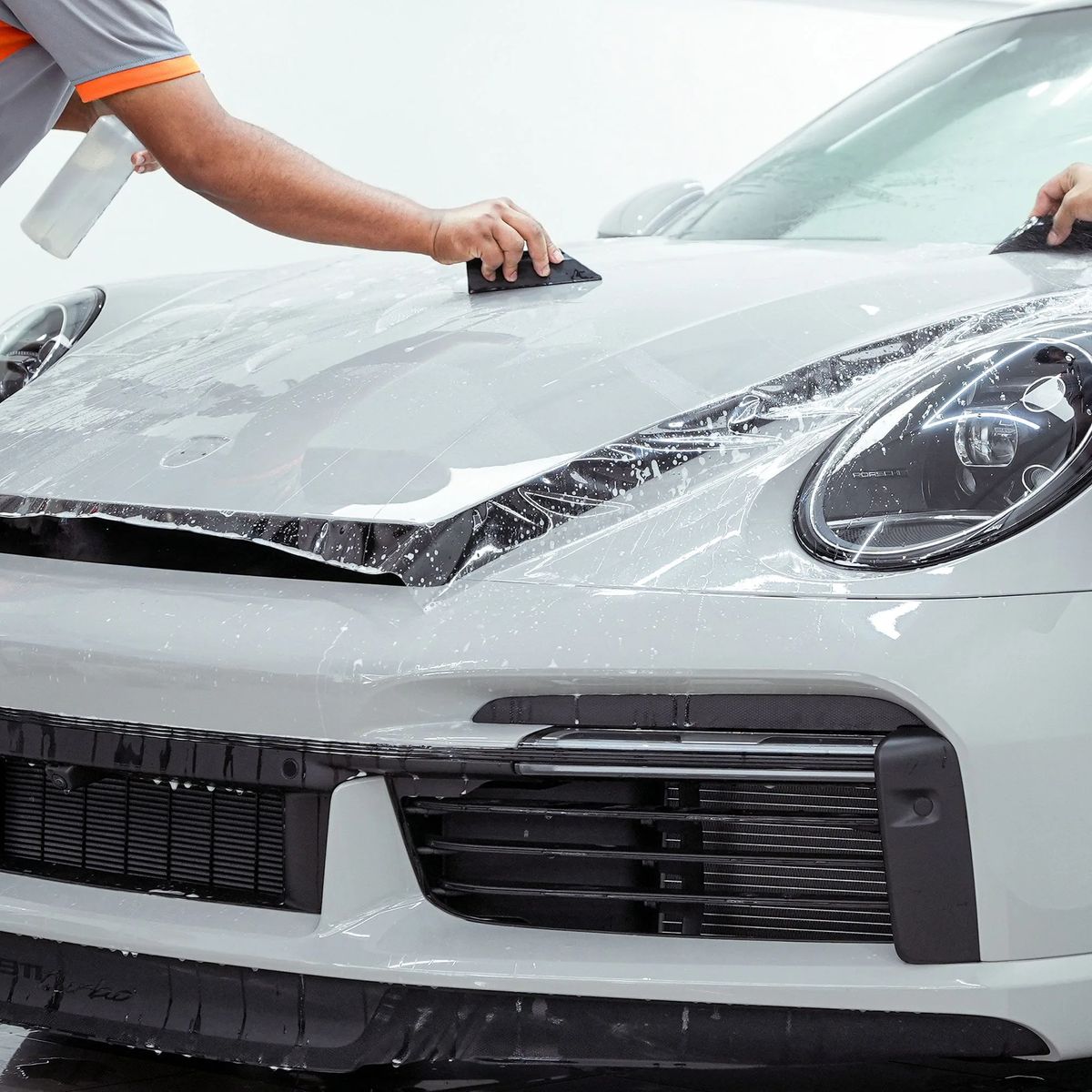
Choosing paint protection film in Sacramento allows you to preserve your clear coat against the worst environmental hazards. This high-tech protective layer is a physical sheet of clear thermoplastic polyurethane that is applied directly to the painted panels. It provides a robust, invisible barrier that absorbs impacts from flying gravel, road salt, and shopping carts while filtering out destructive solar wavelengths.
The high summer temperatures in Northern California cause untreated clear coats to undergo rapid photo-oxidation. Polyurethane film features specialized UV inhibitors embedded directly into the polymer matrix. These chemical compounds absorb harmful ultraviolet radiation and safely dissipate it as low-level thermal energy before it can reach the underlying paint.
The unique molecular structure of high-quality films also allows them to heal themselves when scratched. If your vehicle gets minor swirl marks while driving through Arden-Arcade, the warmth of the sun will trigger the film’s elastomeric polymers to return to their original, flat alignment. This keeps your vehicle looking completely flawless without the need for constant paint correction or polishing.
What Are the Main Threats to Your Vehicle’s Clear Coat?
The main threats to your vehicle’s clear coat are solar ultraviolet radiation, acidic environmental contaminants, and physical road debris. When your car is parked outdoors near the California State Capitol, these elements work together to break down the protective polymers in your clear coat. Recognizing these threats allows you to take proactive measures before the damage becomes irreversible.
Solar Ultraviolet Radiation and Chemical Oxidation
Solar energy consists of various light wavelengths, with UVA and UVB rays being the most destructive to automotive surfaces. When these high-energy waves hit your vehicle’s clear coat, they break the chemical bonds within the polyurethane paint molecules. This chemical process is known as photo-oxidation.
The rate of photo-oxidation can be expressed through chemical reactions where polymer chains (P) break down under UV intensity (I) and oxygen exposure (O2):
This reaction turns the smooth, reflective clear coat into a porous, brittle surface. Over time, the porous paint scatters light in different directions instead of reflecting it directly back to your eyes, resulting in a dull, cloudy appearance.
Acidic Contaminants and Etching
- Bird Droppings: Bird droppings contain high concentrations of uric acid, which can quickly eat through your clear coat within hours when heated by the sun.
- Tree Sap: Deciduous trees in leafy areas like Land Park drop sticky sap that bonds to your paint and contracts as it dries, pulling at the clear coat.
- Insect Splatters: The proteins in bugs are highly acidic and will permanently etch into your vehicle’s front bumper if left unwashed.
- Hard Water Spots: Mineral-rich water from lawn sprinklers leaves behind calcium and magnesium deposits that chemically bond to the paint.
Physical Impacts and Abrasion
As you commute along Interstate 80 or Highway 50, loose gravel and road debris are kicked up by other vehicles. These tiny stones hit your front bumper and hood at high speeds, chipping away at your clear coat and paint. Once a chip reaches the bare metal underneath, moisture and oxygen will quickly lead to rust.
Comparing Long-Term Paint Protection for Vehicles
Selecting the right level of long-term paint protection for vehicles depends heavily on your budget, driving habits, and maintenance preferences. While traditional wax is a great way to add temporary shine, it cannot provide lasting security against physical impacts or intense summer heat. Comparing these options side-by-side helps you determine which solution offers the best value for your vehicle.
| Protection Feature | Paint Protection Film (PPF) | Professional Ceramic Coating | Traditional Automotive Wax |
| Primary Material | Thermoplastic Polyurethane | Silicon Dioxide ($SiO_2$) | Carnauba / Polymer Blends |
| Average Thickness | 6 to 8 Mils (152 to 203 microns) | 1 to 2 Microns (0.04 to 0.08 mils) | Less than 0.1 Microns |
| Physical Impact Protection | Outstanding (Prevents rock chips) | None (Cannot prevent chips) | None (Easily scratched) |
| Hydrophobic Performance | High (Varies by topcoat) | Outstanding (Extreme water behavior) | Moderate (Short-lived) |
| Expected Lifespan | 5 to 10 Years | 2 to 5 Years | 1 to 3 Months |
| UV Protection Level | Maximum (Full physical block) | High (Chemical UV blockers) | Low (Degrades quickly in heat) |
While ceramic coatings offer excellent chemical resistance and extreme hydrophobicity, they do not provide physical protection against rock chips. Paint protection film remains the only product on the market thick enough to absorb physical impacts from road debris. Combining both systems by applying a ceramic coating over your film provides the absolute ultimate defense.
How to Maintain a Car’s Paint Finish in the Central Valley
If you want to know how to maintain a car’s paint finish correctly, you must use proper washing techniques and quality products. Even the best protective coatings can be compromised if you use aggressive brushes or harsh household detergents. Implementing a careful, structured washing routine is the most effective way to ensure your paint remains mirror-like for years to come.
Step 1: Use the Two-Bucket Washing Method
Always wash your vehicle using two separate buckets to avoid rubbing dirt back onto your clear coat. One bucket should contain your soapy water solution, while the second bucket contains clean water for rinsing your wash mitt. Use a high-quality grit guard in the bottom of each bucket to trap dirt particles at the bottom.
Gently glide a soft microfiber wash mitt over the panels, working from the top of the vehicle down to the dirtier lower sections. Rinse the mitt in your clean water bucket after washing each panel to release any trapped grit. This simple technique prevents the creation of fine swirl marks, which are the main cause of paint dullness.
Step 2: Choose pH-Balanced Car Shampoos
Avoid using dish soaps or cheap, industrial-strength detergents to wash your car. These aggressive soaps are designed to strip grease and will quickly wash away your protective waxes and sealants. Instead, choose a pH-neutral car wash soap that lubricates the surface while safely lifting dirt.
Step 3: dry with Microfiber and Lubrication
Never use coarse bath towels or squeegees to dry your vehicle, as they can easily scratch the delicate clear coat. Instead, use a plush, high-GSM microfiber drying towel. Spraying a light quick-detailer or drying aid onto the wet panels before drying provides extra lubrication, reducing friction and static.
If you are ready to secure the absolute best defense for your vehicle, you can contact us to speak with our local installation team about customized packages.
Step 4: Perform Regular Chemical Decontamination
Even with regular washing, microscopic iron particles from brake dust and industrial fallout will embed themselves in your clear coat. Over time, these metallic particles will oxidize and create tiny rust spots on your paint. Using an iron remover spray followed by a gentle clay bar treatment once or twice a year will safely remove these contaminants.
Frequently Asked Questions About Protecting Vehicle Paint
Does paint protection film completely prevent rock chips?
Yes, high-quality paint protection film is highly effective at preventing rock chips. The thick thermoplastic polyurethane layer is designed to absorb the kinetic energy of flying debris and road gravel. Instead of chipping your factory clear coat, the impact is safely absorbed and dissipated by the elastic properties of the film.
Can I wax or ceramic coat over my paint protection film?
Yes, you can apply waxes or ceramic coatings over your protective film to enhance its performance. However, you must use products that are specifically formulated for polyurethane surfaces. Many premium films are now manufactured with a built-in ceramic topcoat, which provides excellent water-beading properties without the need for additional products.
How often should I wash my car to prevent paint damage?
You should wash your car at least once every two weeks to prevent paint damage from environmental contaminants. If you drive through agricultural areas in Natomas or park under heavy tree canopies in East Sacramento, you may need to wash your vehicle weekly. Promptly removing bird droppings and insect splatters is crucial to prevent chemical etching.
Will the sun damage my paint protection film over time?
No, modern professional-grade films are specifically engineered to withstand intense solar exposure without yellowing or cracking. Older PVC-based films were prone to UV degradation, but modern aliphatic polyurethane films use advanced chemical stabilizers. These premium products typically include long-term manufacturer warranties that cover discoloration and adhesive failure.
Is it necessary to polish my car before applying paint protection?
Yes, it is highly recommended to perform a thorough paint correction and polish before applying any long-term protection. Any swirl marks, oxidation, or scratches left on the paint will be locked beneath the clear film, making them permanently visible. Polishing ensures that the surface is perfectly smooth, allowing the adhesive to bond securely to your vehicle.
Conclusion: Investing in Your Vehicle’s Future Value
Keeping your vehicle looking brand new does not have to be an uphill battle against the elements. While traditional waxes offer a temporary shine, they cannot withstand the punishing heatwaves of the Sacramento Valley. Applying high-quality paint protection film in Sacramento is the single most effective way to secure your investment against clear coat oxidation, color fading, and road debris. By establishing a professional physical barrier, you can keep your vehicle looking showroom-fresh while maximizing its ultimate resale value.
When you are ready to take your vehicle’s surface protection to the next level, choosing an experienced local installer is key to achieving a seamless, durable result. At West Coast Evolutions, we specialize in delivering precision installations using premium materials that are specifically engineered to handle our demanding Northern California climate. Let our team of skilled professionals help you select the ideal protective options to keep your car looking spectacular on every journey.